Kosovo is not a title
Sources: the public presentation, the Hungarian National Museum, the Academy essay “Chivalry”, the Ordre du Dragon site and the analysis that carries the recording. The photograph of the certificate has not been independently authenticated. The publication date of the recording is not the date of the ceremony.
For many people Kosovo is the heart of Serbia. Respect for it, for Prince Lazar, the Nemanjići, the churches and the monasteries, stays untouched here. The object of the critique is the public presentation of Dragan Tojagić, which moves that feeling onto a private chivalric name.
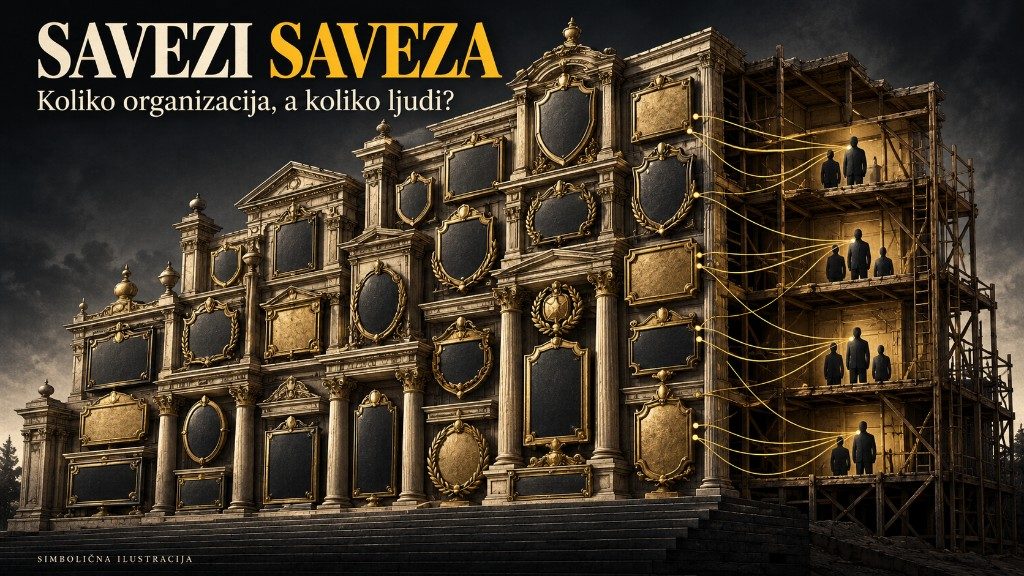
The mechanism is simple. A name that already carries weight — Kosovo, the Dragon, Nemanjić — is placed on a contemporary diploma, cloak and ceremony. The visitor does not receive new evidence. He receives an old feeling, turned toward the man who holds the title today. That is manipulation of the emotion tied to history. Kosovo, faith and ancestors stay outside the charge. Precisely because the feeling is serious, scenery made from it cannot pass as authority.
The name of an order is not its origin
The public presentation of Dragan Tojagić lists, among others, the Order of the Dragon, the Order of the Black Eagle, the Order of the Nemanjići, the Order of the Svevladovići and the Order of the Grgurevići. The list confirms that the names are used. It does not confirm that the organizations are as old as the names they bear, nor that the authority holds outside the circle that issues it to itself. Public presentation
A contemporary association may cultivate history and hold a ritual. When it presents itself as the heir of a medieval institution, it has to show how the succession was transmitted. A coat of arms, a cloak and a ceremonial diploma do not show that by themselves.
1408 is not 1389.
The Hungarian National Museum states that the Order of the Dragon was founded in 1408 by Sigismund of Luxembourg together with Queen Borbála (Barbara). A historical overview of the order also names Stefan Lazarević among the members. The Battle of Kosovo was in 1389, nineteen years earlier. Hungarian National Museum · Order of the Dragon
An order founded in 1408 cannot, under that name, have been a participant in the battle of 1389. The dragon as a motif, the song and the despot’s later membership do not build a bridge to an association that issues diplomas today. The feeling of 1389 is here attached to an order that did not yet exist.
The essay “Chivalry” on the site of the International Esoteric Academy writes that the chivalric Order of the Dragon was founded in the 14th century, that its seat was in Kruševac and that Despot Stefan Lazarević founded it, and it also ties the Order of the Dragon to the Nemanjići. That does not agree with the founding in 1408 stated by both the museum and the Ordre du Dragon site itself. The text on the essay page ends with the mark “Brat N.S.” We analyze what the Academy publishes. The essay is not attributed to Tojagić as a personal quotation. An organization that offers esoteric education has to cite sources and correct a checkable historical error. Essay: Chivalry
A sentence from the ceremony
The recording is on Rumble. The published analysis, channel PrviGarant, title “Dragan Pop”, describes the ceremonial material as an initiation into the Order of the Nemanjići and states that the supplier identifies one participant as Dragan Palačković. Identity, function and any church status have not been independently confirmed. The clip is not the whole ceremony.
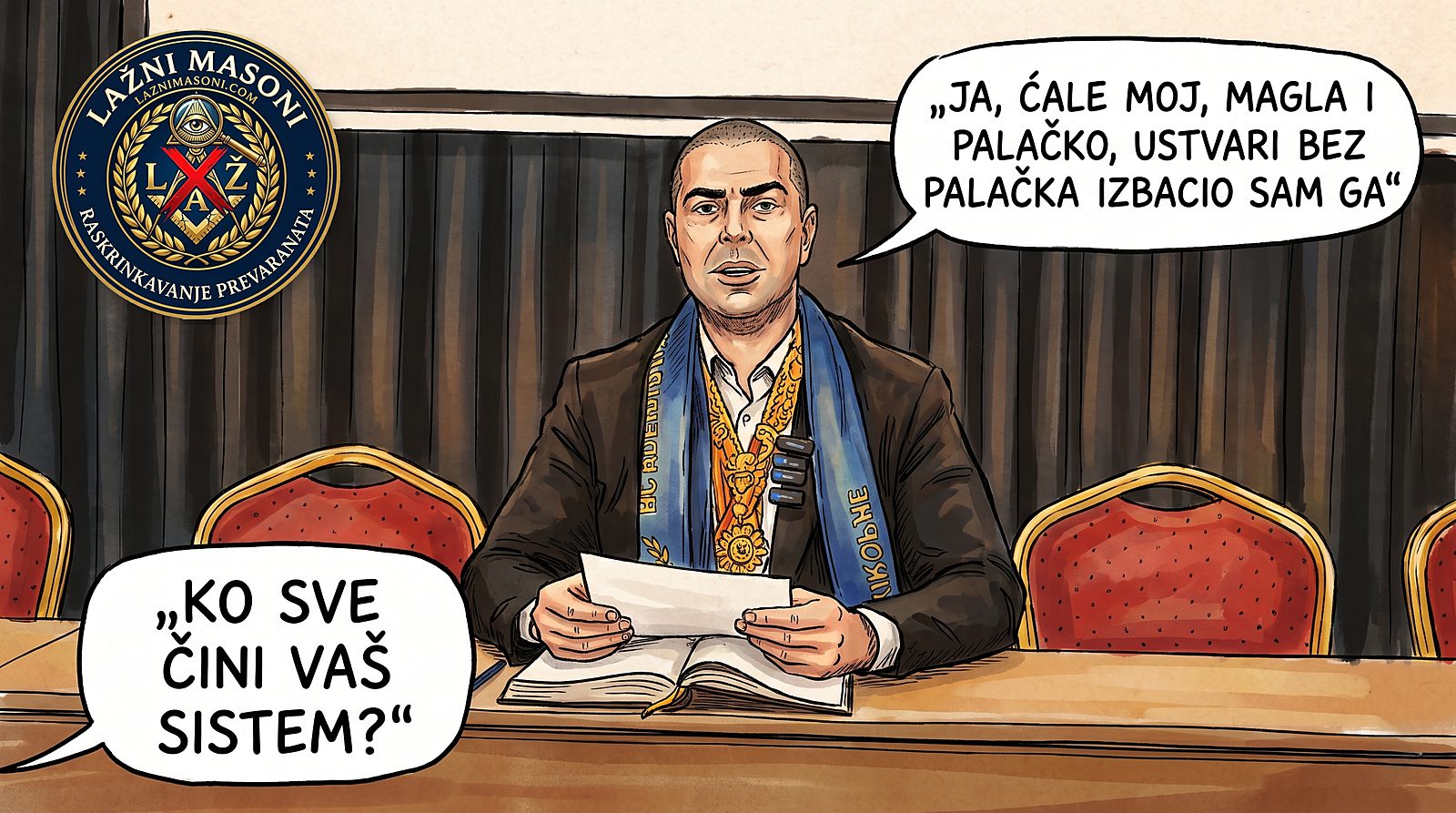
“But, given that we also do our knightly work in churches and monasteries, the Order of the Dragon really does occupy a serious place.”
The whole mechanism sits in that sentence. Church and monastery are offered as the reason the Order of the Dragon “occupies a serious place”. The walls are old. The feeling of the people who enter them is real. The seriousness of a private title does not follow from that. A rite inside a sanctuary does not become a church authorization because it was held there. From this material we do not establish that the participant is a priest, that he presents himself as a priest, or that a church approval exists.
The work of the Order of the Dragon
On the channel PrviGarant a recording has been published under the title “Red Zmaja”. It is embedded here as the work of that order. The recording shows the form of the ceremony. The founding date remains 1408, and the feeling toward Kosovo remains outside the title.
Kosovo as the heart, the title as a loan
People’s bond with Kosovo is not a prop. The problem begins when a private order steps in front of Prince Lazar, Kosovo or the Nemanjići and lets respect for the heritage pass onto today’s leadership. This is a reading of the public effect. The inner motive stays unconfirmed. The same arrangement still stands before the candidate: he feels history, and a diploma is placed in front of him.
Respect for Serbian history does not require accepting the title of a private association. Criticism of that title holds the line between history, tradition and a contemporary ritual. Kosovo remains Kosovo. The diploma remains the paper of a contemporary circle.
The centuries missing on the order’s own site
The site ordre-du-dragon.com itself writes that the order was created in 1408, and then places the filiation of the contemporary work from 1934, under René Chambellan. On the same page Serge Guillemot is listed as grand master, Michel Picandet as deputy, and George Petrescu as grand inspector. Those are the organization’s own claims. The jump from 1408 to 1934 is not a displayed chain of archival acts. Ordre du Dragon · Filiation (PDF)
The published analysis presents a photograph of a certificate that reads Ordre du Dragon and the year 1408, with the names of Michel Picandet and Gheorghe Petrescu. The recipient’s name is covered. The analysis does not find Tojagić’s name on that page. The photograph has not been independently authenticated and does not prove a signature, a payment or an authority. The certificate concerns the Order of the Dragon, while the recording is described as a ceremony of the Order of the Nemanjići. Two names stand in the same emotional package. That is not one demonstrated continuity.
What remains only testimony
The supplier states, referring to people close to him who were present, that Tojagić learned from Picandet and Petrescu, paid for the use of the system, and then began to act on his own. That is indirect testimony, not a confirmed financial finding. The word “franchise” belongs to the supplier. No contract title has been established. A conclusion about what Tojagić thought at the time about the value of the system remains an interpretation of motive.
A title does not answer these questions
- When was this contemporary organization founded, and who leads it today?
- Which document joins its work to the historical order, and not the name alone?
- Who recognizes the authority outside the circle that issues it?
- If Kosovo, the Nemanjići or the church are mentioned, what proves that link?
- If money is paid, to whom does it go, and where is its purpose shown?
Among the aims of its partners the Academy lists personal development, responsibility and humanitarian work. Checkable results, rules and accounts then say more than a conclusion that no order has a purpose. A great name attracts. Trust asks for an exact date, a clear authority and responsibility toward the people whose feeling was taken as scenery. Partners of the Academy
The full analysis: great names, open questions about origin →